
“Paying Our Pain Forward”
We’re all familiar with the phrase “Paying it forward”. When we hear that phrase we use it in reference to one responding to an act of kindness bestowed upon them, with a kind act to another person. It’s important to understand though, that we continually pay forward how we are affected by the way we are treated by others throughout the day. That payment may be in the form of a conscious act or as a spontaneous, unconscious reaction to a given situation. If someone causes our life to be more pleasant with a simple demonstration of benevolence, we may take that demonstration with us into our day and see it manifested in many different ways. It may appear in offering a simple smile to the next person we meet up with. It may be demonstrated as an act of understanding toward someone who may be irritating us with their behavior. Or it could simply show up as a gesture of goodwill, that was seeded by the kindness shown to us and caused us to be in an un-agitated state of mind. Each of these gestures may have escaped us had we not been influenced by the act of kindness or consideration that we received from another person on that day.
The reverse of this is true as well. We are very susceptible to and often do “pay our pain forward”. When we’ve been attacked, subjected to hurtful words or behaviors, feeling slighted, or even being ignored, we could very well consciously or unconsciously, pay forward the pain we feel from that action, to others we interact with during our day.
With the use of understanding we may very well be able to stop our pain from moving forward into our day, our state of mind and our relationships with others. What is understanding? It’s meaning is a bit ambiguous at times. Understanding is knowing why someone may be behaving in a given way at a given time. If someone hits their finger with a hammer as you walk into the room offering them a congenial greeting and they lash out at you, you can immediately apply understanding by knowing that their condition of being in immense pain, may be the cause of their harsh words. Their behavior may have nothing to do with you and the aggressive behavior they’re demonstrating may indeed be very uncharacteristic of them. Our irrational response to another person’s hurtful behavior may be founded in our own lack of how to apply understanding to stressful situations that we face in our lives. We can change this if we can learn to move throughout our day consciously realizing and recognizing that people’s behaviors have sources that we sometimes know and many times do not know. We can better “understand” why they’re behaving in the manner they are, by holding back our knee jerk, aggressive response and thinking about what may have caused them to act the way that they did. When someone is hurting you, it could very well be an instance of that person paying their pain forward. How can we respond to that in a productive way? Rather than paying the pain that’s been caused to us forward by driving it back to the person that’s hurt us, or taking the pain from the situation, allowing it to brew and then be eventually passed on to someone else, we can consciously make an effort to stop ourselves from internalizing and personalizing the pain and attempt to apply “understanding”. We can stop to think of why the person may have behaved toward us the way that they did. We may or may not know what the real reason is, but taking pause with the situation it will allow you to let the action move past you and not inflict damage. Then if possible, offer something that may relieve their pain just a bit. You don’t have to solve their problem or probe their personal space, but you can offer a smile, a kind word or a compassionate heart in return. It’s very important to know that this is not saying that one should let someone consistently bludgeon them or use them as their whipping post. Chronic, dysfunctional situations such as those require much more sophisticated attention paid to them than what is being proposed here.
By developing your ability to gain understanding and use it to process hurtful situations, you may be more able to sidestep personal anxiety while at the same time, become a positive force in alleviating hurt in others. When you are being hurt by someone, know that you may indeed be experiencing an event where someone is paying their pain forward and as fate would have it, you just happen to be the person standing in front of them.

 I believe that there is so much more to be gained by moving beyond simply tolerating each other’s existence. There is so much that we can learn from each other when it comes to living a life. There is so much that we can personally enjoy by sharing our lives and our traditional and personal heritages with each other. And there’s such a greater spiritual and human depth of understanding and love we can achieve by participating in life together. There is only one race that shares our planet and that is the human race. We all love, we all hurt, we all laugh for the same reasons. We all look at the world from the same place behind our eyes as we work with uncertainty at living. It’s so sad when we fail to recognize that we’re all trying to achieve the same basic happiness and contentment in our lives with the time that we have here. Our differences lie in the ways that we accomplish those things. Differences which are many times simply based on our personal upbringing and our location on the planet. There is no such thing as African joy or Chinese pain. There is no such thing as Christian love or Hindu anger. There is only human joy, human pain, human love and human anger. As humans we can offer comfort to the pain and suffering of others in a multitude of ways depending upon our upbringing, customs and cultural heritage. Simple tolerance does not allow us to share those qualities for the benefit of all. We can celebrate the joys of our existence through food, dance, song and laughter in a multitude of ways. Once again simple tolerance does not allow for this to happen. We can see the face of God and feel the hand of peace through a host of spiritual disciplines. But again simple tolerance does not allow us to explore and nourish ourselves through the spiritual facets of others lives. Though I see the good that’s compassionately offered by replacing hostility with tolerance, it doesn’t go nearly far enough in helping the human family bond closer together. It doesn’t offer us the opportunity to actively participate together, learning from each other and helping one another with our lives so that each of us can get the most out of our time here together.
 To truly see the value in you, it is my responsibility to leave my perceptual door open to possibilities for you to demonstrate traits other than those I have confined you to. I can do this by continually getting to know you and how you respond to life situations and occurrences. I can do this by leaving open to the moment, the information that presents itself and that will truly tell me what your feelings and thoughts are at a given time. I can do this by being open to seeing you as a spontaneous individual that defines themselves on a continual basis.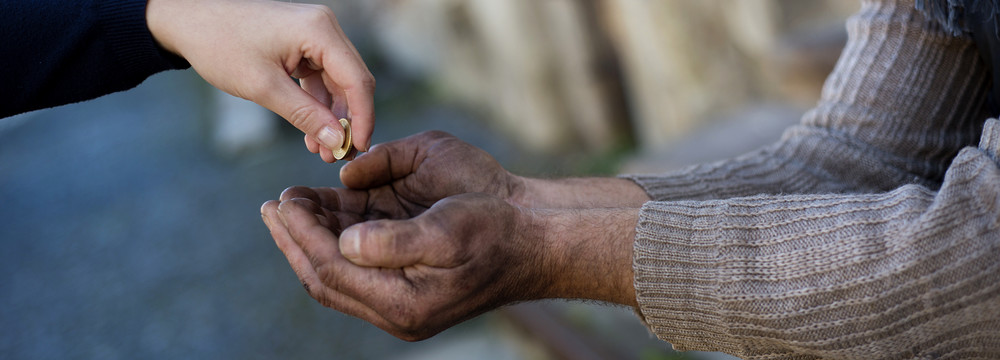
 Dobri Dobrev is a 98 year old man who lives in Bulgaria near the city of Sofia. He spends each day begging in the streets of Sofia collecting money in a cup. To most he seems to be just a simple beggar but to those that take a moment to drop a coin in his cup and share a word, he becomes so much more. It’s said that as he greets you with kind eyes, humility and a smile you realize that there is a much deeper calling in this man’s heart when it comes to serving others than in most people. Elder Dobrev is not begging to serve his own needs. All of the money that he raises, over $59,000 to date, is given by him to restore decaying Bulgarian monasteries and churches and paying the utility bills of orphanages. For his own sustenance he uses his 80 euro/month pension. (approx. $110). Dobri says, “Man has always two wills in himself in every moment of his life, the will to do good and the will to do evil”.



 Q: What role did ignorance play in the initial relationship between the Rabbi and the KKK member?